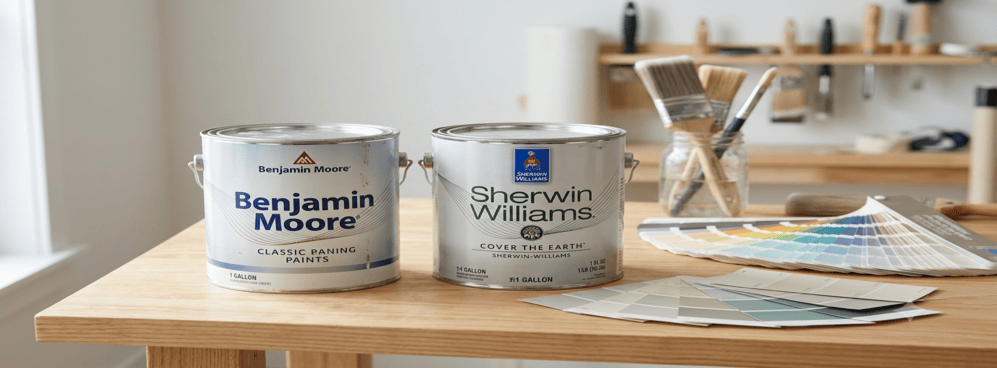
If you've started researching paint for an upcoming project, you've probably noticed that two names come up again and again: Benjamin Moore and Sherwin-Williams. Both are trusted, professional-grade brands used by painters across the country, and both have loyal followings for good reason. But they're not identical, and the differences between them matter more than most homeowners realize once you're standing in front of a wall trying to decide.
If you're weighing a Benjamin Moore painter in Naperville against a Sherwin-Williams certified painter, here's an honest look at how the two brands actually compare, and how professionals decide which one to recommend for a given project.
Where Benjamin Moore Stands Out
Benjamin Moore has built its reputation largely around color depth and pigment quality. Their Gennex color system, a waterborne colorant technology, is known for producing rich, true color that holds up well over time without fading or shifting the way cheaper paints sometimes do.
This matters most in saturated or dark colors, navy blues, deep greens, charcoal grays, where lesser paints can look chalky or uneven after a year or two of sun exposure. Benjamin Moore's Aura and Regal Select lines are particularly known for strong coverage even in these deeper tones, which often means fewer coats are needed to get a clean, even finish. For homeowners investing in a bold accent wall or a dramatic whole-room color, this is frequently where a Benjamin Moore color consultation in Naperville earns its reputation.
Where Sherwin-Williams Stands Out
Sherwin-Williams built its name on durability and consistency, particularly with lines like Emerald and Duration. These formulations are known for excellent scrubbability and resistance to everyday wear, which makes them a popular choice for high-traffic areas like hallways, kids' rooms, and kitchens.
Sherwin-Williams also has a broader network of retail locations, which some homeowners appreciate for convenience when it comes to touch-ups or reordering paint down the road. A Sherwin-Williams certified painter in Naperville typically has deep familiarity with how these product lines perform across different surfaces and conditions, which matters when a project involves a mix of trim, doors, and walls that all need to hold up differently.
So Which One Is Actually Better?
Here's the honest answer: neither brand is universally superior. Both are professional-grade paints trusted by experienced painters, and the right choice usually comes down to the specific project, not brand loyalty alone.
A few factors that typically influence the decision:
The color itself. If you're going for a deep, saturated shade, Benjamin Moore's pigment depth often gives an edge in coverage and richness. For more standard neutrals and mid-tones, both brands perform very similarly.
The surface being painted. High-traffic areas that need frequent cleaning may lean toward Sherwin-Williams' more scrubbable formulations, while lower-traffic, formal spaces might prioritize the finish quality Benjamin Moore is known for.
Budget and coverage. Because Benjamin Moore's premium lines sometimes require fewer coats for full coverage, the higher upfront cost can even out over the course of a project, especially with darker colors.
Painter familiarity. A painter who's worked extensively with one brand for years often gets better, more predictable results with it simply due to experience, regardless of which one is technically "better" on paper.
Why Your Painter's Recommendation Matters More Than Brand Preference
This is really the heart of the decision. An experienced painter has applied both brands across dozens, if not hundreds, of projects and has a real feel for how each one behaves in different lighting, humidity, and surface conditions. That hands-on experience is often more valuable than any spec sheet comparison.
If you're getting quotes from different painting companies, it's worth asking directly which brand they specify and why. A painter who can explain their reasoning, rather than just naming a brand out of habit, is usually one who's thought carefully about what your specific project actually needs. This kind of product knowledge is also part of what separates a straightforward paint job from a properly guided one, especially when color decisions are involved. If you're still working through the broader color selection process, it's worth reading through how a professional color consultation actually works before locking in a brand or shade.
Sheen Considerations Across Both Brands
Regardless of which brand you choose, sheen plays just as big a role in the final look and performance of your paint job. Flat and matte finishes hide wall imperfections well but show wear more easily, making them a common choice for formal living rooms or ceilings. Eggshell and satin offer a nice middle ground of durability and softness, ideal for bedrooms, hallways, and family rooms. Semi-gloss and high-gloss options are more durable and easier to wipe clean, which is why they're typically used in kitchens, bathrooms, and trim work.
Both Benjamin Moore and Sherwin-Williams offer strong options across all these sheen categories, so this decision often ends up mattering just as much as the brand itself.
How This Decision Connects to the Rest of Your Project
Choosing a paint brand isn't really a standalone decision, it's part of a bigger picture that includes your wall prep, your color choice, and how the paint will actually be applied. Even the best paint brand won't look right on a wall that wasn't properly prepped beforehand. If your walls have visible cracks, old patches, or uneven texture, it's worth addressing those first, since paint only performs as well as the surface underneath it holds up. This is one of the reasons proper prep work matters just as much as paint selection in the overall outcome of a project.
It's also worth considering brand and color together with your cabinetry if you're planning a broader kitchen refresh alongside your wall painting. Wall color and cabinet finish need to complement each other, and a color consultant can help make sure both decisions work together rather than being made separately.
Frequently Asked Questions
Is Benjamin Moore more expensive than Sherwin-Williams?
Generally, yes, Benjamin Moore's premium lines tend to cost slightly more per gallon than comparable Sherwin-Williams products. However, since Benjamin Moore's richer pigmentation sometimes requires fewer coats for full coverage, especially in darker colors, the overall project cost can end up fairly close depending on the scope of work.Can a painter mix both brands in the same project?
Yes, and it's actually fairly common. A painter might use Benjamin Moore for a deep accent wall where color richness matters most, and Sherwin-Williams for high-traffic trim or hallways where scrubbability is the priority. The two brands aren't mutually exclusive within a single project.Does one brand last longer than the other?
Both brands offer long-lasting, professional-grade formulations when applied correctly over well-prepped surfaces. The bigger factor in how long a paint job lasts usually comes down to prep quality and application technique rather than brand alone.
Making the Right Call for Your Home
At the end of the day, both Benjamin Moore and Sherwin-Williams are excellent, professional-grade options, and the right choice depends on your specific colors, the rooms being painted, and how the space gets used day to day. Rather than committing to a brand before you've even settled on a color, it often makes more sense to start with the color and finish you want and let your painter guide you toward the product that will get you there most reliably.
If you're trying to decide between the two for your own home, ProVision Painting's color consultation and matching services can walk you through both brands side by side, based on your actual walls, lighting, and existing finishes, so you're choosing with real information instead of guessing. Reach out today for a free estimate and get expert guidance on the right paint for your project.