A fresh coat of paint can make a room look brand new, but only if what's underneath is actually in good shape. One of the most common mistakes homeowners make is painting directly over damaged drywall, hoping the new color will hide cracks, dents, or old patches. It almost never works. In fact, paint tends to make those imperfections more visible, not less, especially under natural light or certain sheens.
If you're planning a repaint anywhere in your home, knowing when drywall repair needs to happen first can save you money, time, and the frustration of redoing a paint job within a year. Here's what actually matters when it comes to drywall repair in Naperville IL, and how to know if your walls need attention before the painters show up.
Why Drywall Condition Affects Paint Results So Much
Paint is not a filler. It's a thin, even coating designed to sit on top of a smooth, stable surface. When drywall has cracks, holes, dents, or uneven texture from an old patch job, paint simply follows the shape of whatever is underneath it. Higher sheens like satin or semi-gloss actually highlight surface flaws even more, since light reflects differently off uneven areas compared to the surrounding smooth wall.
This is one of the main reasons a rushed paint job can look disappointing even when the color and application are technically fine. The problem usually isn't the paint at all, it's what was left unaddressed underneath it. If you want a deeper look at how much this step affects the finished result, this piece on why proper prep work matters before painting covers exactly how prep quality shapes the final look of a room.
Common Drywall Issues That Need Attention Before Painting
Not every wall imperfection requires a major repair, but several common issues should be addressed before any paint goes on:
Nail pops, which happen when drywall nails or screws work their way loose from the framing over time, creating small raised bumps or cracks near ceiling lines and corners.
Hairline cracks, often found around doorways, windows, or ceiling corners, usually caused by normal settling rather than a structural issue, but still visible once painted over if left untreated.
Water stains or soft spots, which can indicate a past or current leak and need to be fully dried out and repaired before painting, since paint applied over moisture will fail quickly.
Old patch jobs that were never sanded properly, leaving a slightly raised or uneven texture that becomes obvious once new paint is applied.
Holes from old fixtures, shelving, or wall art that need to be filled and blended into the surrounding surface rather than just painted over.
If any of these sound familiar in your home, it's worth having a painter take a look before scheduling a repaint. For a broader list of warning signs that your walls might need more than just a color refresh, this rundown of signs your interior walls need repainting is a helpful starting point.
How Professionals Handle Drywall Repair Before Painting
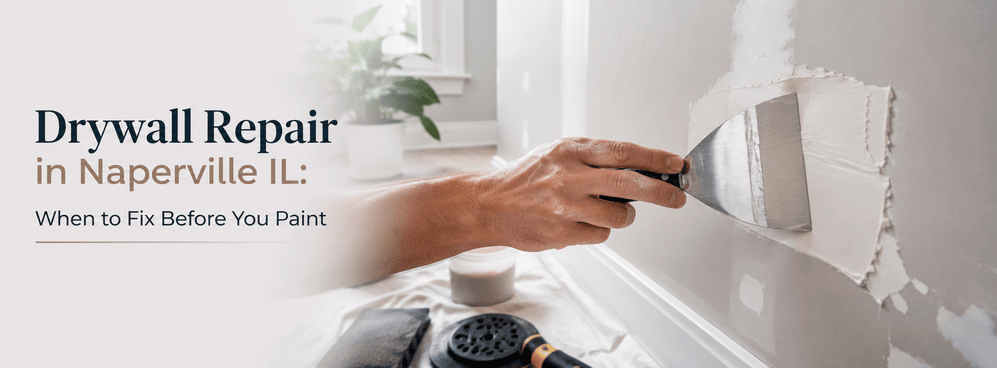
A proper drywall repair and painting process in Naperville typically follows a few key steps, regardless of how minor or major the damage is. First, the area gets cleaned and any loose or damaged material is removed, since patching over crumbling drywall never holds up. Next, joint compound or spackle is applied in thin layers, allowing proper drying time between coats rather than trying to fill everything at once. Once dry, the area is sanded smooth so it blends seamlessly with the surrounding wall texture. Finally, the repaired section is primed separately before painting, since unprimed patches absorb paint differently than the rest of the wall, often creating a visible flashing effect where the patch is slightly duller or shinier than everything around it.
Skipping any of these steps is usually where DIY repairs go wrong. A patch that looks fine right after it's applied can still show through paint later if it wasn't primed correctly or sanded flush with the wall.
When It's a Quick Fix vs. When It's a Bigger Job
Small nail pops, hairline cracks, and minor holes are usually quick fixes that add very little time to a standard painting project. These are common in most homes and don't typically indicate a larger issue.
Larger cracks, especially ones that run diagonally from a corner or appear to be widening over time, extensive water damage, or soft, crumbling drywall may point to something more significant, like structural settling or an active moisture problem. In these cases, it's worth having the issue evaluated before painting, since covering a deeper problem with fresh paint doesn't fix what's actually going on behind the wall.
If you're unsure which category your situation falls into, a quick in-person assessment from a painting professional experienced in drywall repair near Naperville is usually the fastest way to get a clear answer.
Frequently Asked Questions
How long does drywall repair need to dry before painting?
Most joint compound needs at least 24 hours to fully dry between coats, and a final patch typically needs 24 to 48 hours before it's ready for primer, depending on the size of the repair and humidity levels in the home. Rushing this step is one of the most common reasons patches show through paint later.Can you paint over drywall repair without priming it first?
Technically yes, but it's not recommended. Unprimed patches absorb paint differently than the rest of the wall, which often creates a visible dull or shiny spot once the paint dries, sometimes called flashing. Priming the patched area first helps the finish blend evenly with the surrounding wall.Do small cracks in drywall mean there's a structural problem?
Not usually. Small hairline cracks around doors, windows, and ceiling corners are typically caused by normal seasonal settling and temperature changes, not structural issues. Cracks that are wider than a quarter inch, growing over time, or appearing alongside doors that stick or windows that don't close properly are worth having evaluated further.How much does drywall repair typically cost before painting?
Cost depends heavily on the size and number of repairs needed. Minor patches like nail pops or small holes are usually inexpensive and often bundled into the overall painting quote, while larger repairs involving significant sections of drywall or water damage will add more to the total project cost.Should I hire a separate drywall repair company, or can painters handle it?
Many professional painting companies handle drywall repair as part of their standard prep work, especially for common issues like cracks, nail pops, and small holes. Larger structural repairs or significant water damage may require a specialist, but for most repaint projects, a painting company experienced in drywall repair can handle everything in one process.
What Homeowners Should Take Away From This
If you're planning a repaint anywhere in your home, it's worth taking a few extra minutes to look closely at your walls before assuming they're paint-ready. Small imperfections that seem minor now can end up far more visible once new paint is applied, and fixing them properly upfront almost always costs less than repainting a second time.
For homeowners planning a larger project, this is also a good moment to think about the full scope of what a repaint should include, not just color and coats, but the prep work that determines how long the results actually last. This complete guide to interior painting in Naperville walks through what a properly planned project looks like from start to finish, including where drywall repair fits into the overall timeline.
Getting Your Walls Ready the Right Way
Drywall repair isn't the most exciting part of a painting project, but it's one of the most important. Skipping it or rushing through it is one of the easiest ways to end up disappointed with a paint job that looked fine on day one and started showing flaws within a few months.
If you're dealing with cracks, nail pops, old patches, or any other wall damage before your next painting project, ProVision Painting's drywall repair services can assess the damage and handle the repair and painting process together, so your walls end up smooth, even, and ready for a finish that actually lasts. Reach out today to schedule your assessment and get your walls properly prepped before the paint ever goes on.