
Quick Answer
A professionally painted kitchen cabinet finish typically lasts eight to twelve years with proper application and a durable topcoat, though high-touch areas like handles and edges may show wear sooner. Lifespan depends heavily on prep quality, the topcoat used, and how the cabinets are cleaned and used day to day. DIY cabinet paint jobs without a bonding primer or durable topcoat often show chipping within one to two years.
Quick Summary
Professional cabinet painting typically lasts 8 to 12 years with proper prep and topcoat
DIY cabinet painting often fails within 1 to 2 years due to skipped prep steps
High-touch areas like handles, edges, and around the stove wear fastest
Topcoat choice matters as much as the paint color itself
Gentle cleaning habits significantly extend a painted cabinet's lifespan
Refinishing (versus painting) has a different lifespan depending on the finish used
Touch-ups done early prevent small chips from becoming bigger repairs
Table of Contents
What Actually Determines How Long Cabinet Paint Lasts
Professional vs. DIY Cabinet Painting Lifespan
Lifespan Comparison by Cabinet Area
What to Avoid If You Want Your Cabinets to Last
Step-by-Step: How to Extend Your Cabinet Paint's Life
Common Mistakes That Shorten Cabinet Paint Lifespan
Practical Maintenance Tips
Frequently Asked Questions
What Actually Determines How Long Cabinet Paint Lasts
Cabinet paint doesn't fail randomly. It fails for specific, predictable reasons, and knowing them is the difference between a kitchen that still looks fresh a decade later and one that needs a redo within a year or two. The three biggest factors are prep quality, the topcoat used, and how the cabinets are used and cleaned on a daily basis.
Prep work, cleaning, sanding, and bonding primer, determines how well the paint actually adheres to the cabinet surface in the first place. The topcoat determines how well that paint resists the wear of daily opening, closing, and wiping down. And daily habits, like using harsh cleaners or slamming doors, determine how much unnecessary stress the finish takes on over time.
Did You Know?
Kitchen cabinets are opened and closed an estimated several thousand times per year in an average household, which is part of why cabinet painting requires a completely different topcoat approach than wall painting, where surfaces are rarely touched directly at all.
Professional vs. DIY Cabinet Painting Lifespan
A professionally painted cabinet with proper prep and a durable topcoat, like a conversion varnish or a high-quality cabinet enamel, typically holds up for eight to twelve years before it needs a refresh. This assumes the full process was followed correctly: cleaning and degreasing, sanding for adhesion, a bonding primer suited to the cabinet material, and multiple coats of a hard-wearing topcoat.
DIY cabinet painting, on the other hand, often skips one or more of these steps, usually due to time constraints or simply not knowing they matter. Skipping the bonding primer, using a standard wall paint instead of cabinet-grade product, or rushing dry time between coats are the most common reasons a DIY cabinet paint job starts chipping or peeling within the first year or two, sometimes even sooner near the stove or sink.
Lifespan Comparison by Cabinet Area
Cabinet AreaTypical Wear LevelExpected LifespanUpper cabinet doors (low use)Light10 to 12 yearsLower cabinet doors (daily use)Moderate8 to 10 yearsDrawer frontsModerate to high7 to 9 yearsHandles and edgesHigh5 to 7 years before touch-up neededAreas near stove or sinkHigh, plus heat/moisture exposure5 to 8 years
Upper Cabinet Doors
Upper cabinets see the least daily contact, since they're opened less frequently and rarely touched near the surface itself. These typically show the longest-lasting finish of any area in the kitchen.
Lower Cabinet Doors
Lower cabinets get opened constantly for everyday cookware and supplies, which means more frequent contact and a slightly shorter window before wear becomes visible compared to upper cabinets.
Drawer Fronts
Drawers see near-constant use and slightly more mechanical stress from opening and closing, which tends to show wear a bit sooner than door fronts, particularly around the edges.
Handles and Edges
This is almost always where wear shows up first, since hands make direct contact with these exact spots multiple times a day. A durable topcoat helps, but this area often benefits from an early touch-up well before the rest of the kitchen needs attention.
Areas Near the Stove or Sink
Heat, steam, and moisture add extra stress to the finish in these specific zones, which is why a topcoat with strong moisture resistance matters more here than anywhere else in the kitchen.
What to Avoid If You Want Your Cabinets to Last
Avoid using standard wall paint instead of a cabinet-specific enamel or conversion varnish
Avoid skipping the bonding primer step, especially on laminate or previously finished wood
Avoid harsh abrasive cleaners or scrub pads on painted cabinet surfaces
Avoid rushing dry time between coats, since this weakens the final finish
Avoid ignoring small chips, since they tend to spread if left unaddressed
Step-by-Step: How to Extend Your Cabinet Paint's Life
Clean cabinets regularly with a soft cloth and mild, non-abrasive cleaner rather than harsh degreasers
Wipe up grease or moisture near the stove and sink promptly rather than letting it sit
Avoid slamming cabinet doors or drawers, which stresses the paint at the hinges and edges over time
Touch up small chips as soon as they appear, using paint saved from the original project
Consider adding felt bumpers to reduce impact wear at contact points
Schedule a professional inspection every few years to catch early wear before it spreads
Common Mistakes That Shorten Cabinet Paint Lifespan
Using dish soap or all-purpose cleaners with degreasing agents that slowly break down the topcoat
Letting water pool near the sink cabinet without wiping it away
Not saving extra paint for touch-ups, making small repairs harder to match later
Choosing painting over refinishing when the cabinet material actually calls for refinishing instead
Assuming all painted cabinets perform the same regardless of topcoat quality
Practical Maintenance Tips
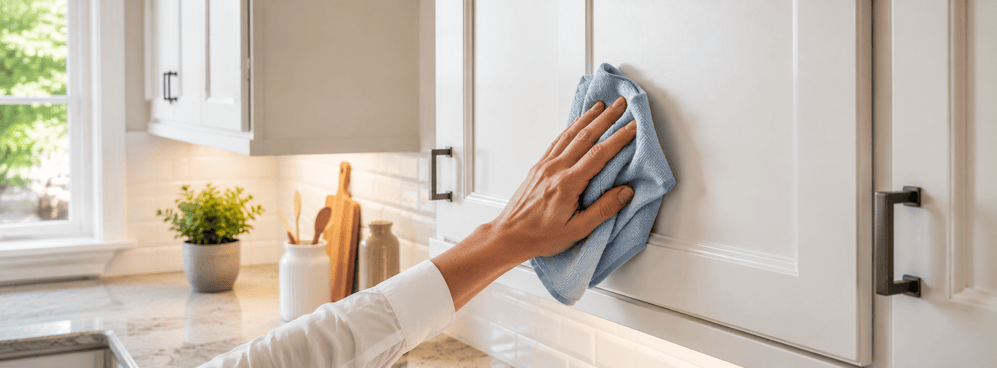
Clean with a microfiber cloth and a small amount of mild soap and water, drying immediately afterward
Store a labeled container of your exact cabinet paint color for future touch-ups
Check hardware regularly, since loose handles or hinges can cause extra stress on the paint around mounting points
If you're noticing wear well ahead of schedule, it may be worth asking whether your original topcoat was suited for daily kitchen use, since not all cabinet paint jobs are built with the same durability in mind
If you're weighing whether painting or refinishing makes more sense for your specific cabinets, it's worth understanding the difference between the two processes before deciding, since the right choice affects both appearance and long-term durability. It's also worth thinking about your overall kitchen style if you're planning other updates at the same time. Homeowners updating an entire home's look often find it helpful to read through how interior painting differs across nearby communities when deciding how a cabinet refresh fits into a broader project. For higher-end kitchens specifically, it's also worth understanding why luxury homes often benefit from specialty painters, since premium cabinetry can require the same level of careful handling as detailed wall trim.
Frequently Asked Questions
How long should I expect painted cabinets to last before repainting?
With proper prep and a durable topcoat, painted cabinets typically last eight to twelve years before a full refresh is needed, though high-touch areas may need earlier touch-ups.Can I extend my cabinet paint's life without professional help?
Yes, to an extent. Gentle cleaning habits, prompt touch-ups, and avoiding harsh chemicals all help extend the finish's life, though a professional topcoat and prep process are what create the foundation for long-term durability in the first place.Why do my cabinets near the sink wear faster than the rest of the kitchen?
Areas near the sink and stove face more consistent exposure to moisture, heat, and grease, all of which put extra stress on the paint and topcoat compared to lower-traffic areas like upper cabinets.Is it better to touch up small chips myself or call a professional?
Small, minor chips can often be touched up at home if you've saved matching paint. Larger areas of wear or peeling are usually better handled by a professional to ensure the repair blends seamlessly and holds up over time.Does cabinet refinishing last longer than cabinet painting?
It depends on the finish and material. Refinishing with a quality stain and sealant can be just as durable as a painted finish, but it's a different process suited to solid wood cabinets rather than laminate or MDF surfaces.
Conclusion
How long your cabinet paint lasts comes down to a combination of proper prep, the right topcoat, and a bit of everyday care once the project is finished. A professionally done job with the right materials can easily last a decade or more, while shortcuts tend to show up as chips and wear within the first year or two. If your cabinets are due for an update or you want a finish built to actually last, ProVision Painting's cabinet painting services start with a proper assessment and process designed for long-term durability. Reach out today to get started.