If you've ever stood at the bottom of a two-story foyer staring up at that soaring ceiling wondering how anyone paints it without falling off a ladder or leaving drip marks everywhere, you're not alone. Vaulted ceilings and two-story entryways are some of the most beautiful architectural features a home can have, but they're also some of the most intimidating spaces to paint yourself. Between the height, the awkward angles, and the risk of ruining an expensive light fixture or hardwood floor below, most homeowners eventually decide this is one project better left to professionals.
That said, understanding how the job should actually be done helps you know what to expect, whether you're planning to attempt it yourself or you're evaluating quotes from painting companies. Let's walk through what it really takes to paint a vaulted ceiling or two-story foyer correctly, safely, and without a mess to clean up afterward.
Why Vaulted Ceilings Are Harder Than Standard Rooms
A normal bedroom or living room ceiling is usually eight or nine feet high, flat, and accessible with a basic ladder. A vaulted ceiling or two-story foyer can climb anywhere from sixteen to over twenty-five feet, often at an angle rather than flat, which changes everything about how the job needs to be approached.
The height alone introduces serious safety concerns. Standard ladders aren't tall enough, and even when they are, working at that height on an angled surface is not something most people have the equipment or experience to do safely. Add in the fact that many two-story foyers sit directly above hardwood floors, staircases, or expensive light fixtures, and the margin for error gets even smaller.
This is one of the reasons a lot of homeowners searching for a high ceiling painting service in Naperville end up calling a professional rather than renting scaffolding themselves. The equipment and safety measures needed for this kind of work go well beyond what's practical for a one-time DIY project.
The Right Equipment Makes All the Difference
Professional painters approach vaulted ceilings with a very different setup than a standard room. Depending on the height and layout, that might include:
Multi-position extension ladders that can be configured for stairwells and angled surfaces, rather than a standard straight ladder that only works on flat ground.
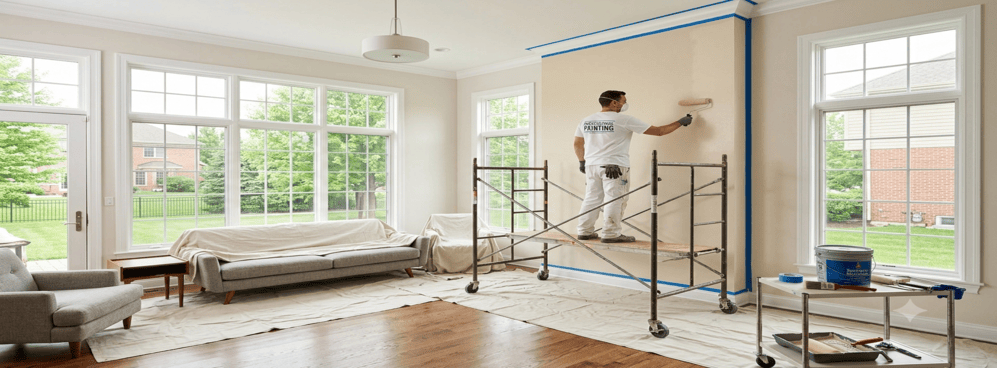
Scaffolding systems, which are often the safest and most stable option for very tall foyers, since they allow a painter to move freely across a wide area without repositioning a ladder every few feet.
Extension poles for rollers, which help reach the upper portions of a wall or ceiling without needing to climb as high, though these require a steady hand to avoid uneven texture or missed spots.
Drop cloths and floor protection that cover a much larger area than usual, since paint drips from that height can splatter further than people expect.
Without the right equipment, even a skilled painter is going to struggle to get a clean, even finish on a vaulted ceiling. This is part of why cost and timeline for these projects tend to run higher than a standard room, the equipment and setup alone take significantly more time.
Preventing Drips: It Starts Before the Paint Ever Goes On
Most drip problems don't actually happen because someone was careless with a roller. They happen because the prep work was rushed or skipped. A few things matter more here than in a standard room:
Proper masking and covering. Because the surface area is so much larger and the ceiling is often angled, overspray and drips can travel further than in a typical room. Covering floors, railings, light fixtures, and stair treads properly before any paint is opened is non-negotiable.
Using the right paint consistency. Ceiling paint that's too thin will drip more easily, especially when applied at odd angles. Professional painters often adjust their technique and product choice specifically for vaulted surfaces, sometimes using specialty ceiling paints designed to resist sagging and dripping on vertical or angled applications.
Working in sections. Rather than trying to cover a huge span at once, painters typically break vaulted ceilings into manageable sections, keeping a wet edge to avoid lap marks while controlling how much paint is on the roller or sprayer at any given time.
Checking the surface first. If there are cracks, old patch jobs, or uneven texture on a vaulted ceiling, paint alone won't fix that, and it can actually make imperfections more visible under the angled light these spaces often get from windows or skylights. This is one of the reasons a thorough drywall repair before painting matters just as much on a vaulted ceiling as it does anywhere else in the home, arguably more, since flaws at that height are harder to fix later.
Spraying vs. Rolling on Vaulted Ceilings
This is a common question homeowners ask once they start researching. Spraying is often the preferred method for vaulted ceilings because it applies a more even coat over a large, hard to reach surface without the streaking that can happen with a roller on an angled ceiling. However, spraying requires extensive masking to protect everything nearby, since overspray travels easily in open, high-ceilinged spaces.
Rolling can still produce excellent results, but it typically requires more skill and a steadier hand when working at height or on an angle, since roller marks are more visible on a vaulted surface than on a flat ceiling at normal height. Many professional crews will spray the ceiling itself and then cut in the edges and trim by hand for a cleaner, more precise finish.
What a Professional Vaulted Ceiling Painting Job Should Look Like
If you're hiring out this kind of project rather than tackling it yourself, here's what a properly run job typically includes:
An in-person assessment before quoting, since photos alone rarely capture the true height, angle, and accessibility challenges of a specific space.
A clear plan for equipment, whether that's scaffolding, ladders, or a lift, along with a realistic timeline based on that equipment.
Full protection of floors, railings, and fixtures before any prep work begins, not just before painting starts.
Proper surface prep, including patching, sanding, and priming where needed, especially on ceilings that haven't been painted in many years.
A finish that's even and consistent across the full ceiling, without visible lap marks, roller stipple inconsistencies, or missed spots near the edges where the ceiling meets the wall.
If you want a deeper look at exactly why this type of project tends to be more involved than homeowners expect going in, this breakdown of vaulted ceiling painting in Naperville and why it's harder than it looks walks through some of the real challenges crews run into on these jobs, from lighting angles to matching existing wall colors.
Serving Naperville, Burr Ridge, and the Surrounding Suburbs
Two-story foyers and vaulted ceilings are especially common in the larger, custom-built homes found throughout Naperville, Burr Ridge, Hinsdale, and Plainfield. Homeowners searching for vaulted ceiling painters in Burr Ridge often have similar needs to those in Naperville, high ceilings, formal entryways, and a strong preference for a flawless, professional-grade finish given how visible these spaces are the moment someone walks through the front door.
Because these ceilings are often the first thing guests see, even small imperfections tend to stand out more than they would in a bedroom or hallway. That's part of why so many homeowners in this area choose to bring in a team that specializes in this kind of work rather than attempting it themselves or hiring a general painter without the right equipment.
When to Call a Professional
If your ceiling is higher than a standard ladder can safely reach, if it's angled rather than flat, or if it sits above a staircase or open floor plan where a fall would be especially dangerous, it's worth calling in a professional rather than attempting the job yourself. The cost of a properly equipped crew is almost always lower than the cost of a fall, a damaged floor, or a rushed paint job that needs to be redone within a year or two.
Getting It Done Right
Vaulted ceilings and two-story foyers can absolutely be painted without drips, damage, or a half-finished look, but it takes the right equipment, the right technique, and enough experience to know how these spaces behave differently from a standard room. If you're searching for vaulted ceiling painters near you and want a team that treats these ceilings as the specialty project they actually are, ProVision Painting's vaulted ceiling services are built specifically around this kind of work, from the initial assessment through the final walkthrough.