If your kitchen cabinets are looking dated, worn, or just not matching the rest of your home anymore, you've probably run into two terms that get thrown around a lot: painting and refinishing. A lot of homeowners assume these mean the same thing, but they're actually two different processes with different costs, timelines, and results. Picking the wrong one for your situation can mean spending more money than necessary, or worse, ending up with cabinets that don't hold up the way you expected.
If you're comparing kitchen cabinet painters in Naperville or trying to figure out which service actually fits your kitchen, this guide breaks down exactly what separates painting from refinishing, when each one makes sense, and what to expect from the process either way.
What Cabinet Painting Actually Involves
Cabinet painting is exactly what it sounds like: applying a new coat of paint over your existing cabinet doors, frames, and drawer fronts. But the process behind a good paint job is a lot more involved than most homeowners expect, and it's the reason painting a kitchen full of cabinets is such a different job from painting a wall.
A proper cabinet painting job typically includes removing all doors, drawers, and hardware so every surface can be worked on evenly. Cleaning and degreasing, since kitchen cabinets accumulate cooking residue that can prevent paint from bonding properly. Sanding, to give the surface enough texture for the primer and paint to grip. Priming with a product suited to the existing material, whether that's wood, laminate, or MDF. Then multiple coats of a durable, cabinet-grade paint, usually finished with a sealant to protect against daily wear, water splashes, and grease.
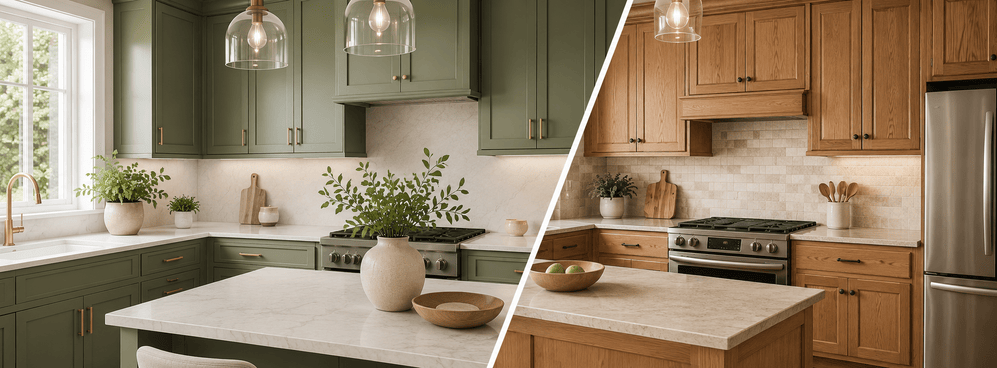
Painting is a great option when your cabinet boxes and doors are in solid structural shape but you simply want a different color or a fresher look. It's also significantly less expensive than replacing cabinets entirely, while still giving your kitchen a dramatic visual update.
What Cabinet Refinishing Actually Involves
Refinishing is a step beyond painting, and it's typically used when cabinets have more wear than a simple paint job can hide, or when you want to preserve and enhance the natural wood grain rather than covering it with solid color.
Refinishing usually involves stripping the existing finish down to bare wood, sanding extensively to remove old stain, scratches, and imperfections, then applying a new stain or clear coat that highlights the wood's natural character. In some cases, refinishing also includes minor repairs to the wood itself, filling small dents or gouges before the new finish goes on.
This process tends to take longer and cost more than painting because of the extra labor involved in stripping and prepping the wood. However, for homeowners who love the warmth of natural wood cabinetry and simply want it looking new again rather than switching to a painted look, refinishing is usually the better route.
So Which One Is Right for Your Kitchen?
The answer really comes down to a few things: the current condition of your cabinets, the material they're made from, and the look you're going for.
If your cabinets are made from solid wood and in good condition, but the stain has faded, yellowed, or just looks tired, refinishing is often the better choice. It brings back the richness of the wood without changing the overall style of your kitchen.
If you're looking to completely change the color or style of your kitchen, say, going from oak or cherry to a modern white, gray, or navy, painting is almost always the answer. Stain can't fully hide the natural color of most woods, so painting is the only realistic way to get a true color change.
If your cabinets are made from MDF, laminate, or a mixed material rather than solid wood, refinishing usually isn't an option at all, since there's no wood grain underneath to stain. In that case, painting is typically the only path to an updated look short of full replacement.
If your budget is tighter and you mainly want a fresh, updated appearance without replacing cabinets, painting tends to be the more affordable and faster option of the two.
Why Cabinet Painting Requires a Different Skill Set Than Wall Painting
This is one of the most common misconceptions homeowners run into when searching for cabinet painting near me. Painting a wall and painting a cabinet door are not the same skill, even though they both involve a brush or sprayer and a can of paint.
Cabinets get touched constantly, opened and closed daily, and exposed to grease, water, and heat near the stove. That means the paint and technique used need to hold up to a level of wear that walls never experience. Professional cabinet painters typically use spray equipment rather than a brush or roller for the doors and drawer fronts, since spraying produces a smoother, more factory-like finish without visible brush strokes.
They also work in a controlled environment, whether that's a dedicated spray booth or a carefully set up space in your home, since dust and debris can ruin a finish if cabinets are painted in an open, high-traffic area. This is part of why hiring an experienced painter matters so much for this specific job. A rushed or improperly prepped cabinet paint job tends to chip, peel, or show brush marks within months, while a properly done one can last for many years.
What to Expect From the Process
A well-run cabinet painting or refinishing project usually follows a similar structure regardless of which option you choose. It starts with an in-home assessment, where the painter evaluates your cabinet material, current condition, and the look you're going for before providing a quote. From there, doors and drawers are removed and labeled so everything goes back in the right place. The bulk of the work, cleaning, sanding, priming, and coating, happens away from your daily kitchen use when possible, minimizing disruption. Finally, everything is reinstalled and adjusted so doors close properly and hardware lines up the way it should.
Depending on the size of your kitchen and the scope of work, this process can take anywhere from a few days to just over a week. Homeowners who've gone through a full kitchen cabinet transformation often say the biggest surprise is just how much of a difference it makes to the entire feel of the room, sometimes even more than a full wall repaint would.
If you want a closer look at how to vet a painter for this kind of project specifically, this guide on choosing the right cabinet painter in Naperville walks through the right questions to ask before hiring anyone for the job.
Color Choice Matters Just as Much as the Process
One thing that trips up a lot of homeowners is picking a cabinet color without really testing how it looks in their specific kitchen lighting. A color that looks perfect on a sample chip can read completely differently once it's covering an entire wall of cabinets under your kitchen's actual lighting. This is where a proper color consultation makes a real difference, especially since cabinet color decisions are a lot more permanent and expensive to redo than a wall color you don't love.
Cabinet Refinishing Naperville IL Homeowners Can Rely On
Whether you're leaning toward a fresh painted look or want to bring back the natural beauty of your existing wood cabinets, the process should always start with an honest assessment of your cabinets' material and condition, not just a quote based on square footage. A good cabinet painter will tell you upfront if refinishing isn't a realistic option for your cabinet material, rather than trying to sell you a service that won't hold up.
Getting Started
Cabinet painting and refinishing both have their place, and the right choice really depends on your cabinets, your budget, and the look you're trying to achieve. If you're still deciding which route makes sense for your kitchen, getting a professional opinion is usually the fastest way to know for sure.
If you're ready to see what your kitchen could look like with a fresh finish, ProVision Painting's cabinet painting services include a free, no-obligation estimate where we'll take a look at your specific cabinets and walk you through whether painting or refinishing makes the most sense for your space. Reach out today to schedule your free estimate and get a clear answer on cost, timeline, and the best finish for your kitchen.