
Quick Answer:
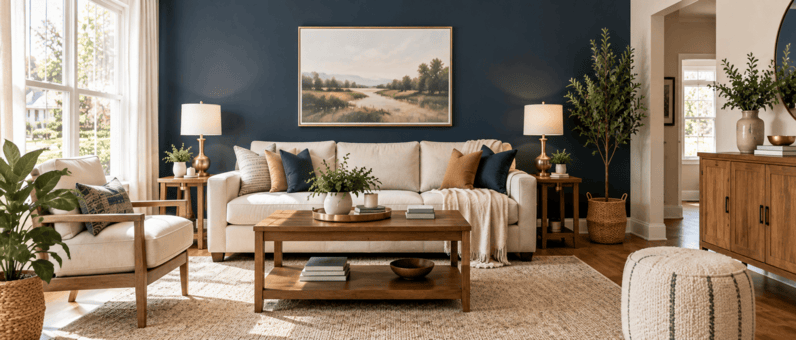
The best accent wall colors for Naperville living rooms typically include deep navy, warm charcoal, soft sage green, and rich terracotta, since these tones add depth and personality without overwhelming a space when paired with neutral surrounding walls. The right choice depends on your room's natural light, existing furniture, and the overall mood you're going for, which is why testing large samples directly in your space matters more than picking from a trend list alone.
Quick Summary
Deep navy and charcoal add drama without feeling overly bold in most living rooms
Soft sage green and muted terracotta bring warmth and work well with natural materials
North-facing rooms benefit from warmer accent tones to balance cooler natural light
South-facing rooms can handle cooler, moodier colors without feeling flat
Accent walls work best when they complement, not clash with, existing furniture and flooring
A Sherwin-Williams-certified painter in Naperville can help match premium formulations to your chosen shade
Testing large samples in your actual room beats trusting a small paint chip every time
Table of Contents
Why Accent Walls Work So Well in Living Rooms
How Lighting Direction Should Influence Your Choice
Popular Accent Wall Colors for Naperville Homes
What to Avoid When Choosing an Accent Color
Step-by-Step: Testing and Choosing Your Accent Wall Color
Common Mistakes Homeowners Make
Practical Tips for a Successful Accent Wall
Frequently Asked Questions
Why Accent Walls Work So Well in Living Rooms
An accent wall gives a living room personality without committing to a bold color across the entire space. It's a way to introduce depth, contrast, and visual interest while keeping the rest of the room neutral and flexible for furniture, art, and seasonal decor changes. This balance is part of why accent walls remain such a popular choice among homeowners who want their living room to feel intentional rather than flat, without going all in on a dramatic full-room color.
Living rooms in particular benefit from this approach since they're typically the most furnished, decorated, and frequently used space in a home. An accent wall anchors the room's design without competing with everything else happening in the space, furniture, art, lighting fixtures, and family photos included.
Did You Know?
Color psychology research consistently shows that deeper, richer wall colors in a living room can make a space feel more intimate and grounded, while lighter accent colors tend to open a room up visually, which is part of why the "right" accent color often depends as much on the feeling you want as it does on current color trends.
How Lighting Direction Should Influence Your Choice
Before settling on an accent color, it's worth understanding how your living room's natural light will interact with it throughout the day. North-facing rooms receive cooler, more indirect light, which can make blues and grays feel colder than expected. Warmer accent tones, like terracotta or a rich amber, often balance this out nicely.
South-facing rooms get warmer, more direct light throughout the day, which gives cooler tones like navy or sage room to breathe without feeling flat or washed out. East and west-facing rooms shift throughout the day, bright and cool in the morning or evening and warmer the rest of the time, so testing a sample at different hours matters even more in these spaces.
Popular Accent Wall Colors for Naperville Homes
Deep Navy
Navy has remained a consistently popular accent choice for good reason. It pairs beautifully with warm wood tones, brass fixtures, and neutral furniture, and it tends to read as sophisticated rather than overly bold, especially in south or west-facing rooms with ample natural light.
Warm Charcoal
A softer alternative to pure black, warm charcoal adds depth and modern contrast without feeling harsh. It works particularly well in living rooms with a lot of natural wood or leather furniture, since the undertones complement those materials nicely.
Soft Sage Green
Sage has become a favorite for homeowners wanting warmth and calm without leaning into trendier, more saturated greens. It pairs especially well with natural textures, linen, rattan, light wood, and tends to feel timeless rather than tied to a specific passing trend.
Rich Terracotta
Terracotta brings warmth and a subtle earthy richness that works beautifully in north-facing rooms needing a bit of visual warmth. It also pairs nicely with brass and black accents for a more layered, collected look.
Deep Forest Green
For homeowners wanting more drama than sage but still rooted in a natural palette, deep forest green offers a bold, grounding accent that works particularly well alongside gold or brass hardware and warm wood tones.
Muted Blue-Gray
A softer, more subdued alternative to true navy, blue-gray works well in transitional spaces that need to flow between more traditional and more modern design elements without picking a hard side.
What to Avoid When Choosing an Accent Color
Avoid choosing a color based solely on trend without considering your room's actual lighting
Avoid picking an accent wall color that clashes with existing flooring or large furniture pieces you're not replacing
Avoid testing only a small paint chip instead of a larger sample directly on your wall
Avoid choosing a color so bold it fights with everything else in the room rather than complementing it
Avoid assuming the same accent color will look identical in every room regardless of light direction
Step-by-Step: Testing and Choosing Your Accent Wall Color
Identify which wall in your living room naturally draws the eye, often the wall behind a sofa or fireplace
Consider your room's light direction and how it will affect warm versus cool tones throughout the day
Shortlist two or three colors that complement your existing furniture and flooring
Test large samples directly on the wall, viewed at different times of day
Live with the samples for a few days before making a final decision
Confirm your chosen color and finish with your painter before scheduling the project
Common Mistakes Homeowners Make
Choosing a trendy color without testing how it actually looks in their specific room's lighting
Picking an accent wall that doesn't relate well to the room's existing furniture or flooring tones
Testing only a small chip rather than a large sample patch on the actual wall
Choosing a color that's beautiful alone but clashes once placed next to everything else in the room
Rushing the decision instead of living with a sample for a few days before committing
Practical Tips for a Successful Accent Wall
Choose the wall with the most visual weight in the room, usually behind a sofa, media console, or fireplace
Test your shortlisted colors in large sample sizes rather than small chips, since lighting changes everything
Keep surrounding walls in a complementary neutral so the accent wall has room to stand out
Working with a Sherwin Williams certified painter in Naperville can help ensure the exact formulation and finish you want is applied correctly, especially for richer, more saturated colors that require proper coverage technique
If your living room's accent wall is part of a broader color refresh across your home, it's worth considering how the space fits into your overall plan. Homeowners noticing wear or dated colors throughout multiple rooms often find it's time for a full home repaint rather than tackling just one wall, and weighing whole house versus room-by-room costs can help you decide the most cost-effective way to approach a bigger project if an accent wall turns out to be the first step toward something larger.
Frequently Asked Questions
How do I choose which wall should be the accent wall?
Typically the wall with the most visual weight, often the one behind a sofa, fireplace, or media console, works best as an accent wall, since it naturally draws the eye without disrupting the room's flow.Will a dark accent color make my living room feel smaller?
Not necessarily. A single dark accent wall, paired with lighter surrounding walls and good lighting, often adds depth and coziness rather than making a room feel cramped, especially in rooms with ample natural light.How many walls should I paint as an accent in a living room?
Generally just one wall works best for a true accent effect. Painting multiple walls in a bold color tends to shift the look from an accent to a full room color change.Should my accent wall color match or complement my existing furniture?
Complement rather than match exactly. A slightly different tone that works harmoniously with your furniture and flooring usually looks more intentional than an exact match, which can feel flat.Do I need a professional color consultation for just one accent wall?
It's not strictly necessary for a single wall, but a consultation can help ensure the color works well with your room's lighting and existing finishes, especially if you're torn between a few options.
Conclusion
An accent wall is one of the simplest ways to add personality and depth to a Naperville living room without committing to a full room color change. From deep navy to soft sage, the right choice comes down to your room's lighting, existing furniture, and the mood you're going for. If you'd like guidance choosing the perfect accent color for your space, ProVision Painting's color consultation and matching services can help you test and finalize the right shade with confidence. Reach out today to schedule your consultation.