Quick Answer
Paint color matching is the process of accurately reproducing an existing paint color, whether from a wall, a fabric swatch, or a discontinued product, using tools like a spectrophotometer along with expert judgment. It matters because even small mismatches become obvious once painted, especially when touching up a section of wall or extending a color into a newly added space. Accurate matching depends on more than just scanning a sample, it also requires understanding sheen, paint age, and how a color reads under your home's actual lighting.
Quick Summary
Paint color matching reproduces an existing color as closely as possible using a physical sample
A spectrophotometer scans color, but sheen and paint age also affect the final match
Photos are far less reliable than physical chips or painted samples for matching
Matching matters most for touch-ups, additions, and extending a color into a new room
A Benjamin Moore color consultation in Naperville often includes matching services as part of a broader color plan
Lighting direction and bulb type can make a "perfect" match look slightly off in certain rooms
Professional matching saves time and prevents costly repainting from an inaccurate guess
Table of Contents
What Paint Color Matching Actually Involves
Why Photos Alone Rarely Produce an Accurate Match
When Color Matching Matters Most
DIY Matching vs. Professional Color Matching
What to Avoid When Trying to Match a Color
Step-by-Step: How Professional Color Matching Works
Common Mistakes Homeowners Make
Practical Tips for a Successful Match
Frequently Asked Questions
What Paint Color Matching Actually Involves
At its core, paint color matching is about reproducing a specific color as accurately as possible, whether that color already exists on your wall, on a piece of trim, or in a fabric you want your paint to complement. The process typically starts with a physical sample, since digital images and screens distort color in ways that make an exact match nearly impossible to achieve from a photo alone.
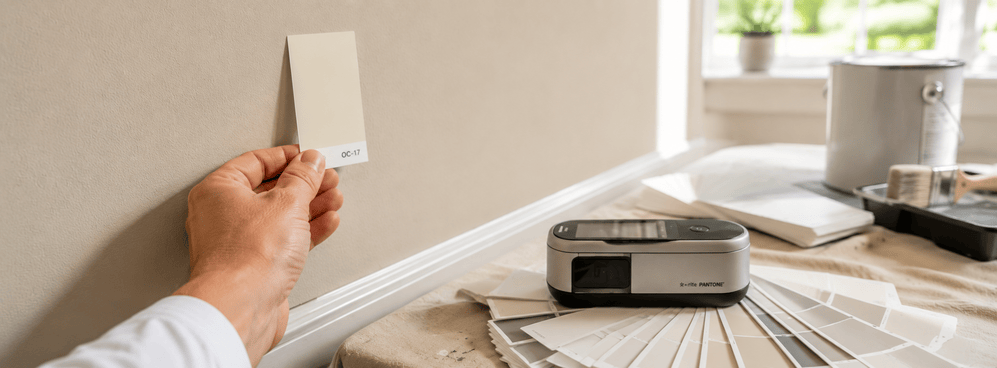
A spectrophotometer, a handheld device that reads the precise wavelength composition of a color, is the standard tool used to generate a starting formula. From there, a trained eye adjusts for factors the device can't fully account for, like how the original paint has aged, faded, or picked up a slight undertone shift over time.
Did You Know?
Paint colors can shift subtly over several years due to UV exposure, even in colors marketed as fade-resistant, which is one of the main reasons a color match against an older wall sometimes looks slightly different from the original formula on paper.
Why Photos Alone Rarely Produce an Accurate Match
It's tempting to snap a photo of a wall or a swatch and expect a paint store to match it exactly, but screens and cameras interpret color differently depending on lighting, white balance, and even the specific device being used to view the image. A color that looks warm gray in a photo might actually read as a soft green in person.
This is why professional color matching services always ask for a physical sample rather than relying on a picture. A small chip of the actual painted surface, or a painted piece of trim, gives a spectrophotometer real, unfiltered information to work from, something a photo simply cannot replicate no matter how good the camera is.
When Color Matching Matters Most
Color matching becomes especially important in a few common situations. Touch-ups are the most frequent case, patching a section of wall that got damaged and needing the new paint to blend in seamlessly rather than standing out as an obvious patch. Extending a color into an addition or a newly renovated room is another common scenario, where consistency across the whole home matters for a cohesive look.
Matching also comes up when a homeowner loves an existing color but doesn't know the name or formula, sometimes inherited from a previous owner or a much older can of paint with a faded label. In all of these cases, an accurate match prevents the need to repaint an entire wall or room just to fix one small section.
DIY Matching vs. Professional Color Matching
A DIY approach, bringing a photo to a paint counter or guessing based on a color name from memory, can work occasionally for very simple, common colors. But for anything with a subtle undertone or a slightly aged finish, DIY matching often results in a color that's close but noticeably off once it's actually on the wall next to the original.
Professional matching through a paint color matching service in Naperville uses both the spectrophotometer reading and trained visual comparison to account for sheen differences and paint aging, producing a result that holds up under real scrutiny rather than just looking close under store lighting.
What to Avoid When Trying to Match a Color
Avoid relying on a photo alone, even a high-quality one, as your only reference for matching
Avoid assuming a paint name or code from years ago is still accurate if the formula has since changed
Avoid matching sheen incorrectly, since the same color in a different sheen can look like an entirely different shade
Avoid skipping a test patch before committing to painting a full wall or room
Avoid matching under artificial lighting alone without checking the result in natural daylight as well
Step-by-Step: How Professional Color Matching Works
Bring a physical sample, a paint chip, a small painted piece of trim, or a fabric swatch, rather than a photo
A spectrophotometer scans the sample to generate an initial color formula
A trained professional adjusts the formula based on sheen and the apparent age of the original paint
A small test sample is mixed and applied to a test area or board
The test sample is checked against the original in both natural and artificial lighting
Final adjustments are made if needed before the full batch is mixed
Common Mistakes Homeowners Make
Bringing only a photo instead of a physical sample to a matching appointment
Assuming an old paint can's label is still accurate if the formula has changed over the years
Not accounting for sheen when trying to match an existing wall
Painting an entire wall from a "close enough" match instead of testing a small section first
Forgetting that lighting conditions in the room being matched can make a technically accurate match look slightly different
Practical Tips for a Successful Match
Save a labeled sample or extra can of paint from your original project for future touch-ups or additions
Bring your sample to a consultation in person rather than relying on digital photos
Test the matched color in the actual room, under the room's real lighting, before committing to a full repaint
If you're unsure of your original paint's brand or formula, a Benjamin Moore color consultation in Naperville can often help identify the closest equivalent even without the original can
If you're planning a broader color refresh rather than just a touch-up, it's worth thinking about how your wall color choices connect to other parts of your home. Homeowners updating their kitchen at the same time often want their new cabinet finish to work seamlessly with their wall color, and understanding how long a cabinet paint job typically lasts can help you plan both projects together rather than as separate decisions down the road.
Frequently Asked Questions
Can paint color matching work from a photo on my phone?
It's not recommended as a sole reference. Photos are affected by lighting, camera settings, and screen calibration, all of which distort color. A physical sample produces a far more accurate and reliable match.How accurate is color matching using a spectrophotometer?
Very accurate for the base color reading, but sheen and the age of the original paint can still affect how close the final result looks in person, which is why a trained professional's adjustment matters alongside the device.Do I need the exact paint brand to get an accurate match?
No. A color matching service can typically reproduce a color's formula regardless of the original brand, as long as a physical sample is available to scan and reference.How long does a color matching appointment usually take?
A straightforward match can often be completed within the same appointment, though more complex matches involving aged or faded paint may require a test sample and a short follow-up to confirm accuracy.Is color matching only useful for touch-ups?
Not at all. It's also commonly used when extending a color into a new addition, replicating a favorite inherited color, or matching wall paint to an existing accent piece like trim or furniture.
Conclusion
Paint color matching is a lot more precise than simply eyeballing a can of paint against your wall. Between sheen, lighting, and the natural aging of paint over time, getting an accurate match really does require the right tools and a trained eye. If you're dealing with a touch-up, an addition, or simply want to identify a color you already love, ProVision Painting's color consultation and matching services can help you get it right the first time. Reach out today to get started.